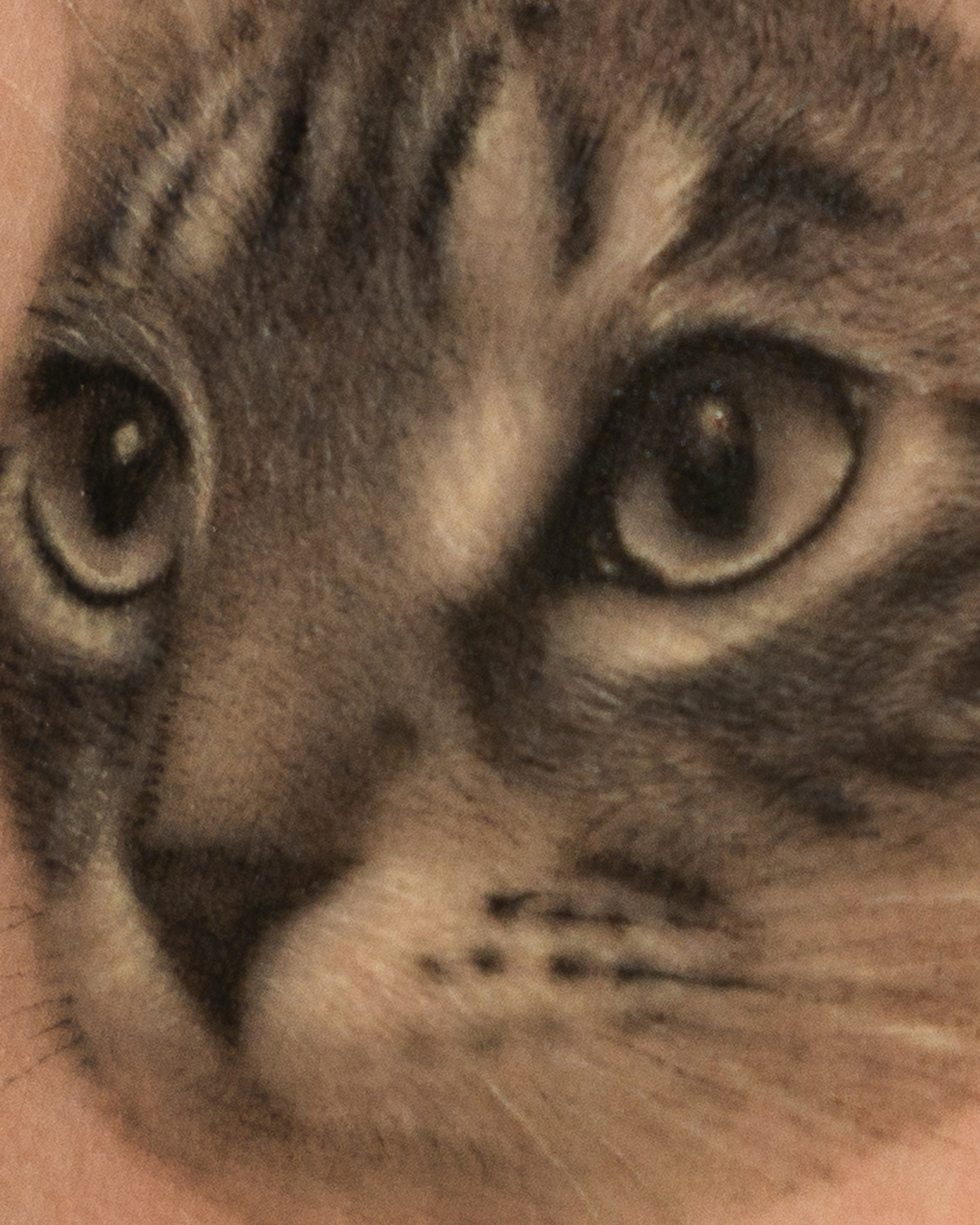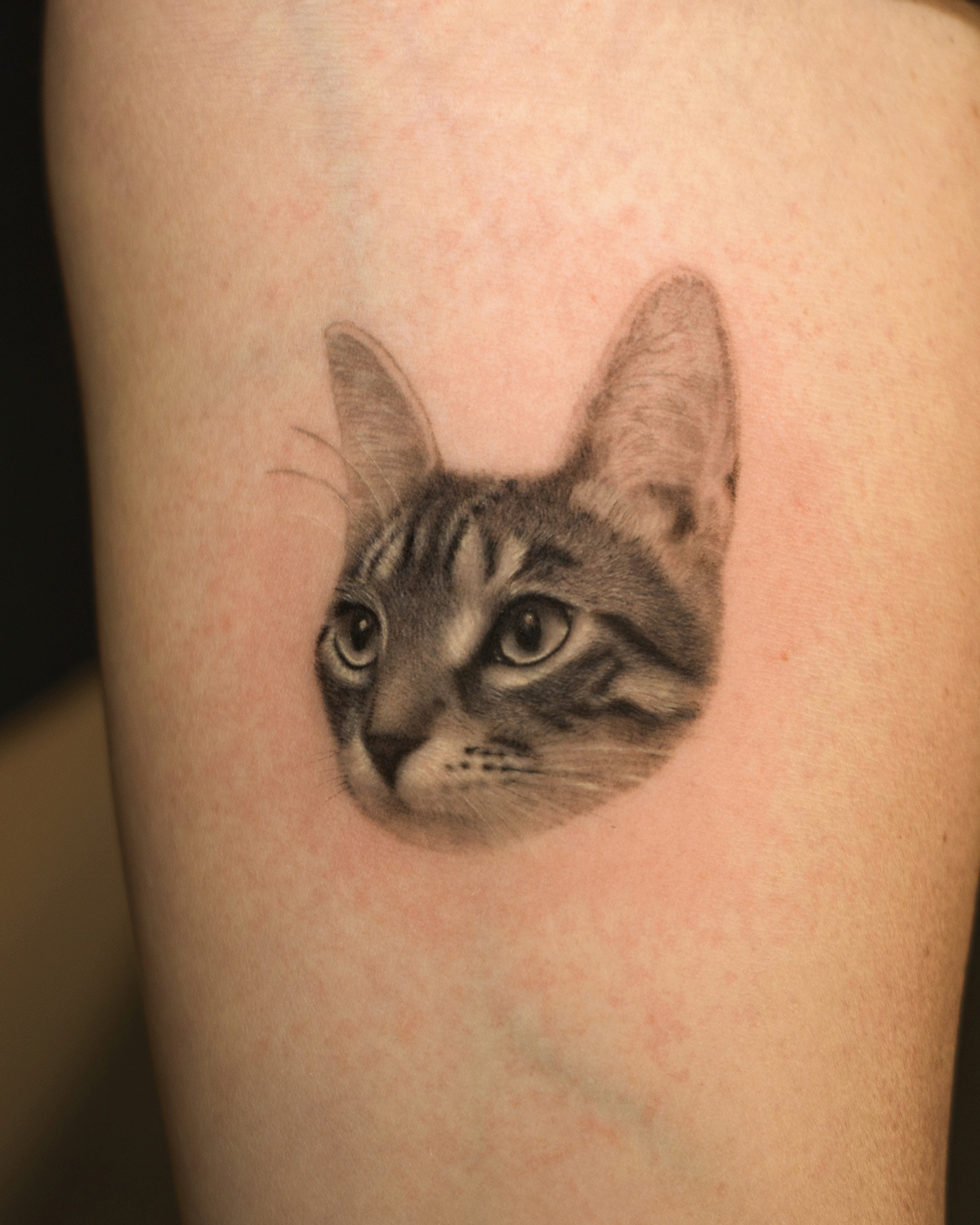
1. Do you only do pet, animal, or human portrait tattoos?
No. While my work focuses on pets (dogs, cats), animals, and human portrait tattoos, I work with a wide range of realistic subjects. Realistic tattooing requires a combination of skills from many different tattoo styles, which allows me to work across black and grey, micro realism, chrome tattoo, color realism, animation-inspired styles, and ornamental designs as well.
2. Where do you work?
I work as a resident artist at Monolith, located in Fort Greene, Brooklyn, New York. My studio is easily accessible from anywhere in NYC.
3. Is it true that small, highly detailed tattoos fade or lose clarity over time?
Small, highly detailed tattoos may look softer over time, with certain lines or details appearing less crisp than they did at first. However, this is not simply a matter of size alone. A tattoo’s long-term appearance is influenced by many factors, including the density of the design, the spacing between lines, the placement on the body, skin type, sun exposure, aftercare, and the skin’s natural aging and changes over time.
For that reason, when working on smaller tattoos, it is especially important to adjust the amount of detail and the spacing carefully from the beginning. In my work, I consider not only how the tattoo looks on the skin now, but also how it can remain as stable as possible over time.
Skin changes naturally with time, and a tattoo cannot exist completely separate from those changes. Just as a drawing on paper can appear different once the paper becomes creased, the impression of a tattoo can also shift gradually as the skin’s elasticity and surface change. For that reason, I encourage people to get tattooed only when they are comfortable with the idea that a tattoo will age together with their skin.
To help manage these changes as much as possible, I offer one complimentary touch-up within one year of the appointment when I feel it is needed.
4. Is tattooing possible on darker skin tones?
Yes. Brighter areas can be expressed using lighter grey tones and white ink.
However, once the tattoo is fully healed, a layer of natural skin tone settles over the ink, which can make the tattoo appear about 10–15% darker than it looks immediately after the session.
This is something to consider when planning the design.
5. How is pricing determined?
Pricing is determined per project rather than by the hour.
To provide an accurate quote, I need details such as the subject, size, and placement. If you email me this information, I will review it and get back to you as quickly as possible.
6. How long does a realistic portrait tattoo usually take?
Because my work involves a high level of detail, it generally takes longer than a standard tattoo. For my most common portrait size—approximately 2 to 2.5 inches:
Black and grey: about 4 hours
Color: about 4.5 hours
Actual session time may vary depending on skin condition and complexity.